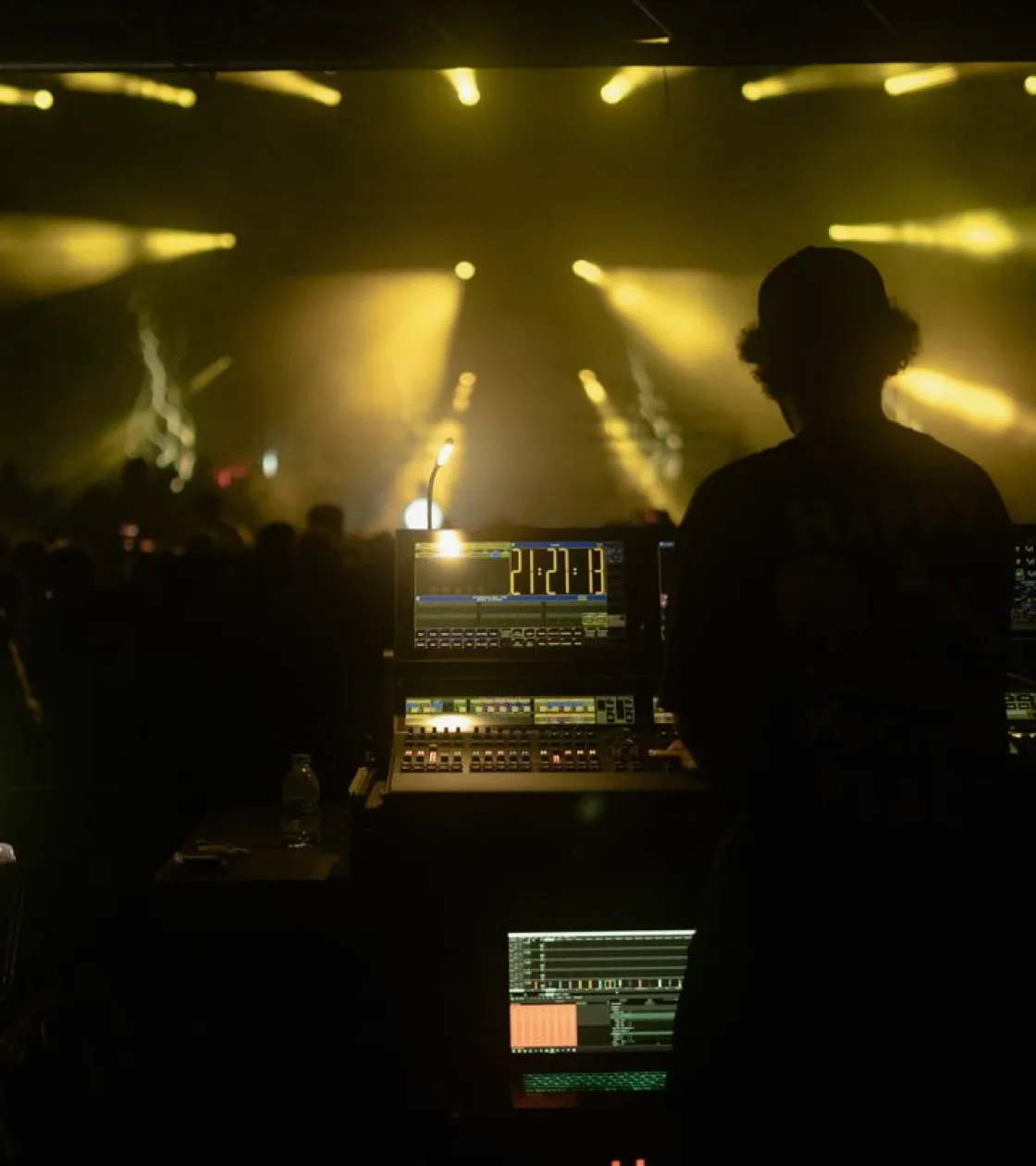
Start with a show that cannot go wrong
Our workshops open with a dummy show, a short programme built only for practice. It has two presenters, a few pre-recorded items and a simple set of captions, and nothing in it matters to anyone outside the room. That is deliberate. People learn the grammar of a live gallery far faster when a missed cut costs nothing.
Daniel Whitaker, who writes this, has taught the same opening exercise for years. Trainees sit at the switcher with the director beside them and cut the dummy show once, slowly, with the director calling every shot by name. Only after that do we speed it up. By the end of the first morning most people have felt the rhythm of a call and a cut landing together.
We keep the dummy show deliberately plain. A clever format would distract from the habits we are trying to build: listening to the director, watching the preview monitor before the programme monitor, and keeping the hand still until the call arrives.
- Two presenters and a handful of recorded items
- Slow first run, called shot by shot
- Faster second run once the call and cut align
Paper run sheets and why we still print them
Every exercise comes with a printed run sheet. It lists each item in order, the cameras expected, the graphics due and the timings the producer is aiming for. Screens are fine for the real show, but on paper a trainee can write notes, circle a tricky transition and hold the whole programme in one glance.
We ask each trainee to mark up their sheet before the run: where the camera changes, which caption comes early, what happens if a guest overruns. Marking it up forces them to read the show rather than wait to be told. Directors learn quickly too, because a vague sheet produces vague notes from the operators.
At the end of a session people take the sheet away with their own annotations. Several have told us they pin it by their desk, and the habit of preparing a sheet before any live event tends to outlast whatever else they remember from the day.
- Items, cameras, graphics and timings on one page
- Trainees mark up the sheet before each run
- Annotated sheets go home with the trainee
Talkback drills in a quiet room
Talkback is the part of the gallery that new crews underestimate. The vocabulary is small, but it has to be exact, short and calm. We run drills where the director only says ready, take, and the name of the camera, and the crew answers only when asked. Everyone else stays silent.
We rehearse the awkward moments too: a camera operator who loses a shot, a caption that arrives late, a guest who stands up unexpectedly. The aim is not to make people memorise scripts but to let them hear what a steady voice sounds like when something has gone slightly wrong. Trainees take turns directing, which usually changes how they speak when they go back to operating.
A quiet room matters. We ask for the gallery door to stay shut and for phones to be put away. Noise in a control room is rarely dramatic; it builds from small side conversations, and the drills are partly about noticing that.
- Short, fixed phrases for ready, take and camera names
- Rehearsed slips: lost shot, late caption, wandering guest
- Everyone directs at least once
Recording the run and watching it back
We record every practice run, programme output and talkback together, and play it back before the session ends. Watching your own cuts on a screen is humbling and useful. A mistimed take that felt fine in the moment is obvious in playback, and so is a good one that the operator did not notice making.
Playback is also where directors hear themselves. A rushed call, a repeated word or a long pause before a cut is easy to spot when the audio is replayed against the pictures. We pause the recording at each moment worth discussing and ask the trainee what they saw at the time, before offering our own view.
These recordings stay with the client for their own team's use. Some bring them to the next internal rehearsal and compare, which gives a plain measure of progress without any scoring system.
- Programme output and talkback recorded together
- Pause and discuss, trainee first
- Recordings stay with the client team
Using the client's own equipment where we can
Where possible we teach on the equipment the team will actually use. A switcher from one maker can behave quite differently from another, and shortcuts learnt on the wrong desk can become bad habits. If the client has a gallery already, we run the workshop in it, often outside normal working hours so nothing is disturbed.
When that is not practical we bring a portable switching and monitoring setup and build a temporary gallery in a meeting room or studio. It is less glamorous than a fitted room, but it lets crews practise the basics: sources, preview, programme, audio and graphics, without the pressure of a live transmission.
Either way, we agree the session plan with the client beforehand: who attends, what roles they hold and what the show will look like. A mixed group of operators, directors and producers works well because each hears what the others need.
- Teach on the client's own desk when possible
- Portable setup for meeting rooms and studios
- Session plan agreed in advance with the client
What we leave behind after the workshop
The last part of a session is practical. We write up the run sheet template used, the talkback phrases agreed and a short list of habits to keep: check preview before taking, keep notes short, rehearse before every new format. It is a few pages, not a manual, and it is written for the people who attended.
We also suggest a first small live job for the newly trained crew, something low in risk such as an internal talk or a recorded studio piece. It gives them a chance to apply what they learnt before facing a bigger audience, and it gives us a chance to review how it went if the client wishes.
Training is not a one-off in our view. Crews change, formats change, and a short refresher before a new season often does more good than a long course in the middle of one.
- Run sheet template and agreed talkback phrases
- A short list of habits to keep
- A modest first live job suggested
The tools we rely on in training are ordinary ones: a dummy show, a printed run sheet, a quiet room, a recorded run and, where we can, the client's own desk. None of them is clever. They work because they let people practise the small, repeated habits that keep a live gallery calm, and because they cost nothing when something goes wrong in the room.