Before the first caption: the rundown comes first
Graphics and playout work starts well before anyone sits down in the gallery. The first thing we ask for is the rundown, even if it is rough, because every lower third, clip and sting hangs off a line in that document. We read it with the producer and mark each place where something has to appear on screen: a name, a score, a headline, a pre-recorded package.
From there we build the show in the graphics system, one item per cue, named the way the director will call it. A caption called Guest 2 is no use to anyone at ten past eight; one called with the person's name and role can be found in a second. This unglamorous tidying is where most of the calm on air comes from, and it takes longer than people expect.
We also agree early who owns the spelling. Names, job titles and places are checked once, in writing, by the producer, and then they do not change without a message to the gallery.
- Get the rundown, however rough, as early as possible
- Name every graphic the way the director will call it
- One person confirms spellings, in writing
Building the playout list
Playout means the clips, bumpers and opening sequences that run from a server or a player rather than from a camera. Each file is loaded, checked for length and tested for sound before rehearsal, never during it. We watch every clip to the end, because a package that fades to black two seconds early is the sort of fault you only find by looking.
We order the list to match the running order and keep a few spare items to hand: a holding slide, a neutral loop, a short music bed. If a guest arrives late or a segment is cut, the director can ask for one of them and the screen is never empty.
Where a show has sponsor credits or fixed legal captions, those sit in their own folder with their durations written on them. Nobody should be working out timings from memory with the programme already running.
What the operator actually does in the gallery
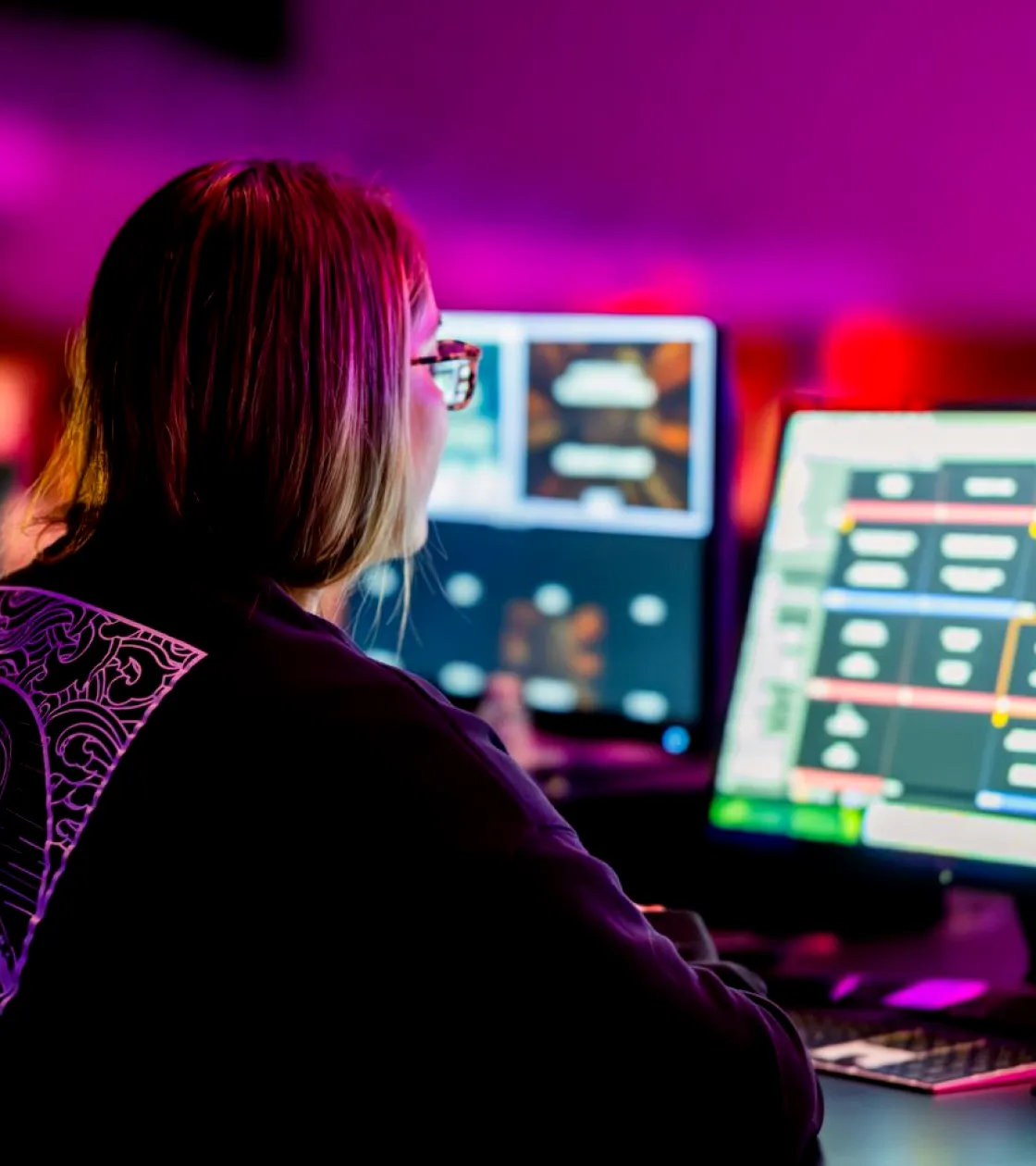
During the show, the operator sits beside the vision mixer and listens on talkback. The director calls a cue, usually a little ahead of the moment, and the operator readies the item so that it can go the instant it is wanted. Most of the job is waiting calmly and being ready, with short bursts of precise action.
Lower thirds are taken in and out on the director's word. Replays are cued from a recorded camera feed, trimmed to the right moment and held until called. Clips are rolled, and the operator watches the countdown so that the return to the studio lands cleanly rather than after an awkward pause.
The quiet rule is to confirm out loud. When we say 'graphic ready, guest one', the director knows exactly what will appear and can plan the cut around it.
Rehearsal is where mistakes are cheap
We run a stumble-through of the whole programme whenever the schedule allows it, and a shorter run of the opening and the first break when it does not. The aim is not to make everything perfect but to meet the problems while they cost nothing: a caption that overflows its box, a clip with no audio, a replay that starts a beat late.
Every fault found in rehearsal is written down and fixed before doors open or the stream goes live. We keep the notes short and share them with the director so that the whole crew shares the same picture of the show.
It also helps the presenters. Seeing their own names appear in the right place at the right time takes a little tension out of the room, and that shows on air.
- Run the opening and first break at the very least
- Write down each fault and fix it before going live
- Share the notes with the director
When something goes wrong on air
Something always eventually does. A guest changes their job title at the last minute, a clip will not play, a feed drops for a few seconds. The first rule is not to announce the problem in a raised voice; the second is to tell the director in a single plain sentence what has happened and what the options are.
Because we keep spare items ready, the fix is usually quick: skip the caption, run the holding slide, move to the next item and come back to the missed one if there is time. The viewer rarely notices, which is exactly the point.
Afterwards we note what happened and why, without blame, and adjust the list or the process so that the same slip is less likely next time.
Handing over a show that others can run
Not every client wants us in the chair for every broadcast. Where a team intends to run its own graphics, we leave the project organised, with clear names, a short written guide and a list of the usual cues for that format. A competent operator who has never seen the show should be able to open it and understand it.
We also like to sit through the first live programme with the new operator, in the background, rather than hand over the keys and disappear. A few quiet reminders in the right moment are worth more than a long manual.
That, in the end, is what we aim for with real-time graphics and playout: a tidy desk, a prepared list and a show that keeps to the second without anyone raising their voice.
Good live graphics are mostly preparation: a rundown read carefully, files checked to the end, names agreed in writing and a rehearsal that finds the faults early. On air, the work is steady listening and clear speaking. If you would like to talk through how a show of yours could be set up, the contact page is the place to begin.