The request from Margaret
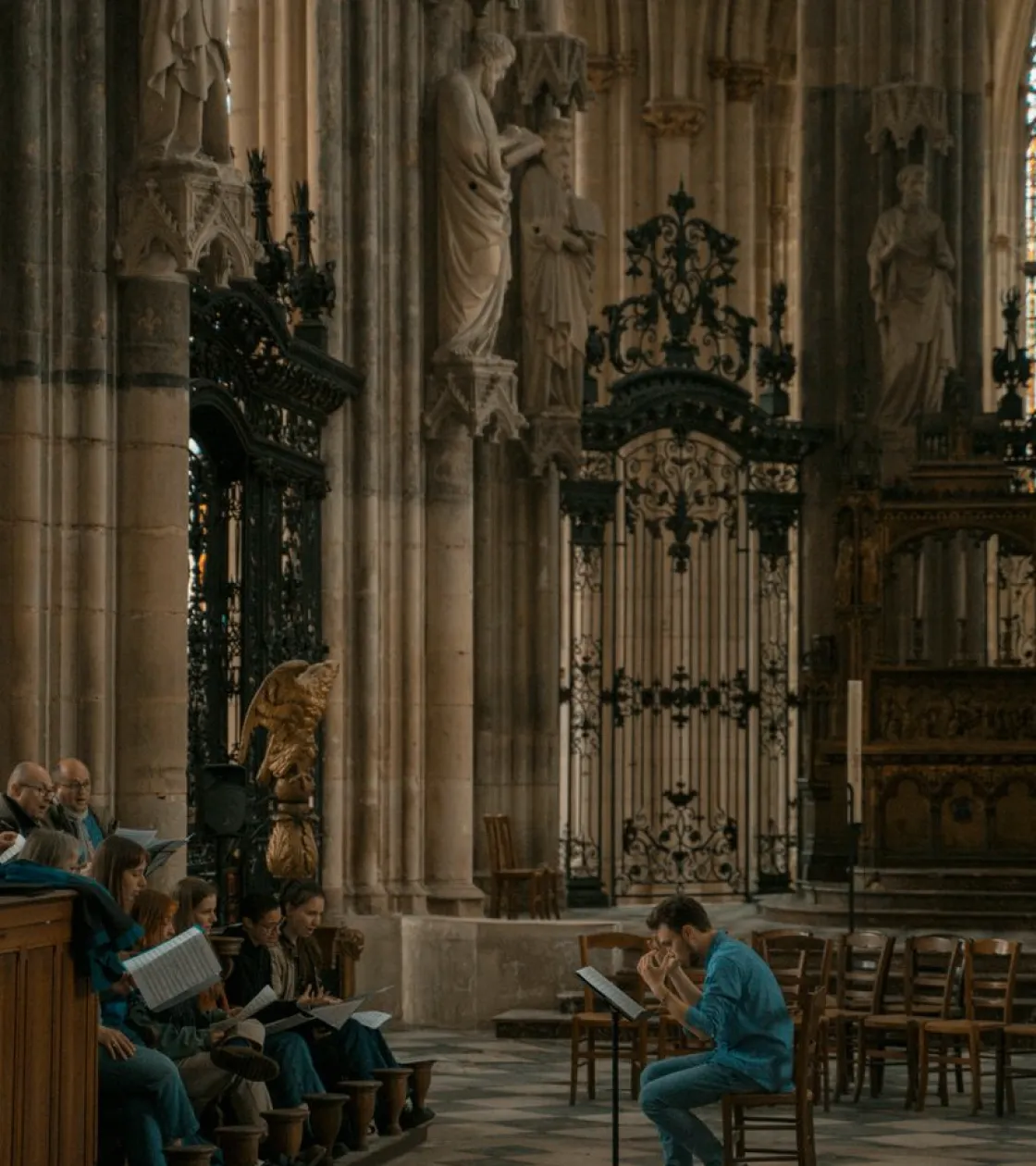
Margaret sings alto in a village choir and also looks after its bookings. Early in the autumn she rang us with a plain problem: relatives abroad and several members who could no longer travel wanted to watch the annual concert, and nobody in the choir knew where to begin. She had no wish for anything elaborate. She wanted a picture that stayed up, sound that matched what the audience heard in the nave, and a link she could send in an email.
I asked her the questions we ask everyone first. Which platform would the viewers be on, how many people were likely to watch, and who would be standing at the back of the church on the evening. The answers were modest: a public page the choir already used, perhaps sixty viewers, and two volunteers who would hand out programmes and could not be asked to watch a screen. That settled the size of the job before we talked about a single piece of equipment.
Visiting the building before planning anything
A church is a hard place for a stream. Stone walls ring, the lighting is warm and uneven, and the mobile signal in the nave can disappear entirely. I went with Callum one weekday afternoon while the building was empty. He walked the aisles with a phone and a laptop, testing the upload speed in each corner, while I stood where the cameras might go and looked at the choir stalls under the lights they would really have.
The result was a short written plan. Two fixed cameras would sit on tripods, one wide from the back of the nave and one tighter on the conductor and front row. A third, hand-held, would cover soloists from the side aisle. Callum found that the vestry had a wired network point with a steady connection, and that decided it: we would run a cable the length of the aisle rather than trust the air.
- Upload speed tested in every part of the nave
- Wired network point found in the vestry
- Camera positions marked on a floor plan
Sound, graphics and what viewers would see
Sound caused us the most thought. Microphones placed for the live audience gave a muddy, echoing mix on a stream, so we hung two above the choir and added one near the organ, then listened on headphones in the vestry while the choir ran through a hymn. Callum balanced the feed against the picture so that the singing arrived with the faces rather than slightly after them.
On screen we kept things plain. A simple title card opened the stream, each piece appeared with its name for a few seconds as a caption, and a closing card thanked the church. Margaret supplied the running order and the spellings of the composers, and we checked every caption against her list. Viewers should notice the music, not the graphics, and a clean caption does that better than anything animated.
The rehearsal that changed the plan
We streamed a private test the evening before, with the choir in their normal places and the page set to unlisted. Within ten minutes it showed us two things. The hand-held camera swung too quickly on the movement between pieces, so the operator agreed to hold still on a wide shot while the singers turned pages. And a vestry heater switched on, with a faint hum, partway through the first hymn.
Neither problem would have been easy to fix live. The heater was turned off and a note taped to its switch, and the camera operator marked a spot on the floor. Margaret also used the rehearsal to rehearse her own announcement, which she had been dreading. She read it twice, shortened it, and by the end was relaxed about speaking to a lens.
- Unlisted test stream run the evening before
- Camera movement slowed between pieces
- Heater noise traced and switched off
The evening itself
On the night Callum monitored the encoder and the link from a table beside the vestry door, with a second connection ready if the first faltered. I sat with the director's script and cut between the three cameras in time with the music, mostly staying on the wide shot and moving in for soloists. The audience in the pews never saw any of it, which is how we like it.
The stream ran for an hour and ten minutes without a drop. Afterwards Margaret told me the best moment was a message from a former member now living overseas, who had watched the whole programme and recognised her old place in the second row. The recording was saved and sent to the choir the same week for anyone who had missed it.
What we would repeat for another small event
The pattern worked because it was proportionate. A visit to the venue, a written plan, a wired connection, a rehearsal with the real people in the real room, and a short list of captions checked with the organiser. None of it needs a large crew, and most of it happens before the day. Small choirs, parish groups and societies often assume streaming demands far more than it does.
If you are thinking of something similar, the useful preparation is on your side of the table too: a running order, the names of the people on stage, and the answer to who will be at the venue and able to open the doors early. With those in hand we can plan quickly and keep the whole production calm.
Margaret's concert was not a grand production, and that was its strength. A visited building, a cable instead of hope, a rehearsal the night before and a few carefully checked captions gave a small choir an hour its distant friends could share. Good live streaming rarely depends on special equipment. It depends on asking sensible questions early and giving the people on stage a quiet, well-tested room.